GSoC 2026 - Week 2
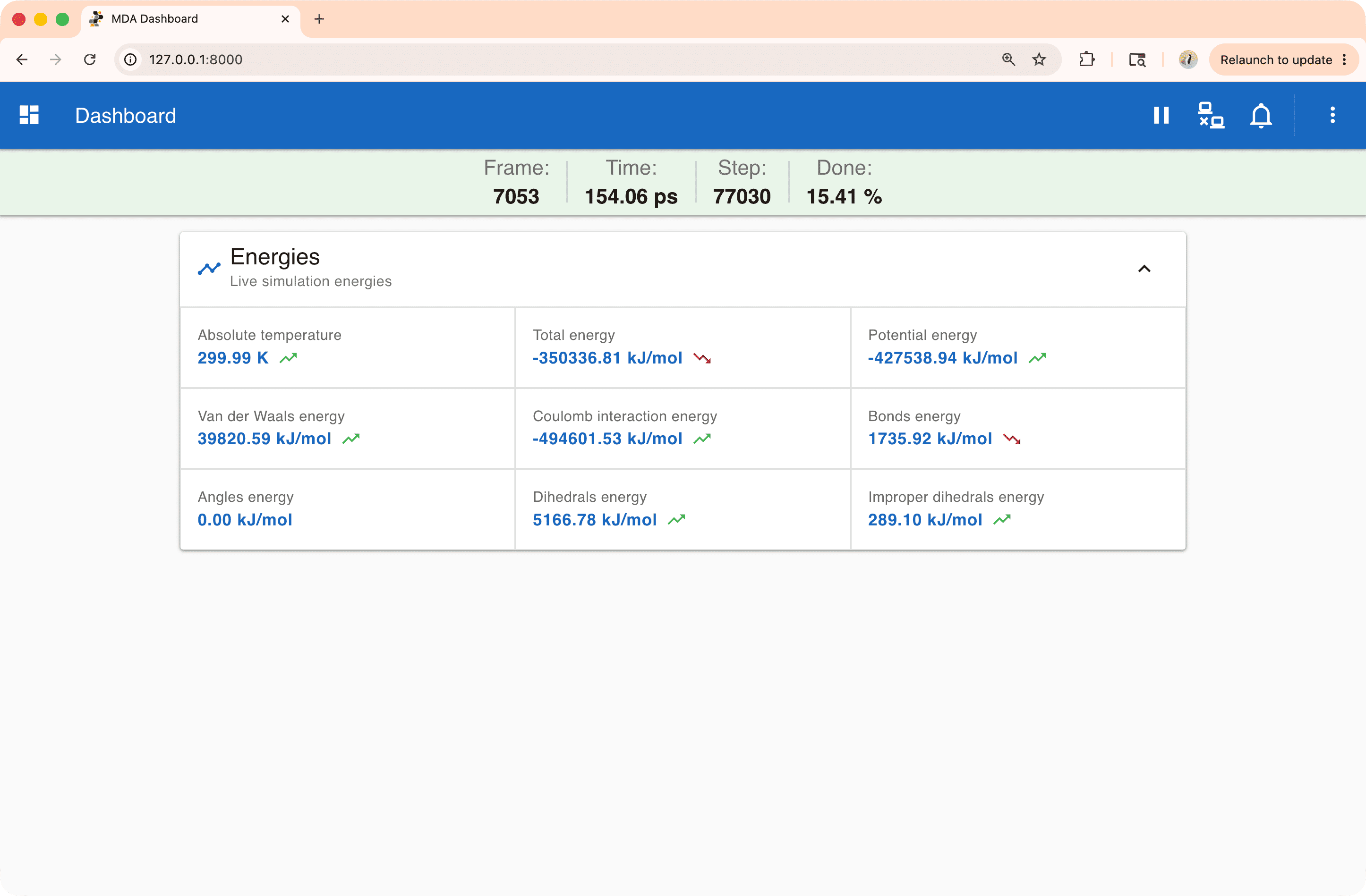
Here is week 2 update for my project:
I added basic connectivity between the frontend and backend as part of PR #6. Here are some of the changes made as part of this PR:
- Added socket.io support to backend and frontend
- Added iteration of trajectories (
trajectory.next()) loop in kernel core- Added pause / resume support during trajectory iteration
- Added support for pushing timestep info (time and energies) from backend
- Added GUI to control simulation (connect / disconnect / pause / resume)
- Added live display of timestep info (time and energies) on the dashboard
- Added universe configuration support from GUI
- Added backend tests for all current functionality
- Added frontend tests for all existing GUI
- Update README with instructions to build and view docs locally
- Add frontend coverage as well to codecov
- Add deploy.yaml to build and publish to TestPyPI/PyPI
I also cleaned up some of the unused stuff from the cookiecutter template and update the docs to make it easier for others to start trying this project. These were made as part of PR #7. Here are some of the changes made as part of this PR:
- Updated README.md to only include installation and run details
- Moved developer details to DEVELOPMENT.md
- Added missing test project dependencies to pyproject.toml
- Cleanup unused stuff from cookiecutter template
- Added ‘Getting Started’ details to readthedocs docs
- Added more documentation to backend classes
With these changes, we have a functioning dashboard that lets us control the MD simulation (connect / disconnect / pause / resume) and shows live timestep and energy details as seen in the cover image above. All the universe configuration settings are also in place and functional - these include imdclient related params, custom kwargs, etc. Here is a screenshot of the settings page:
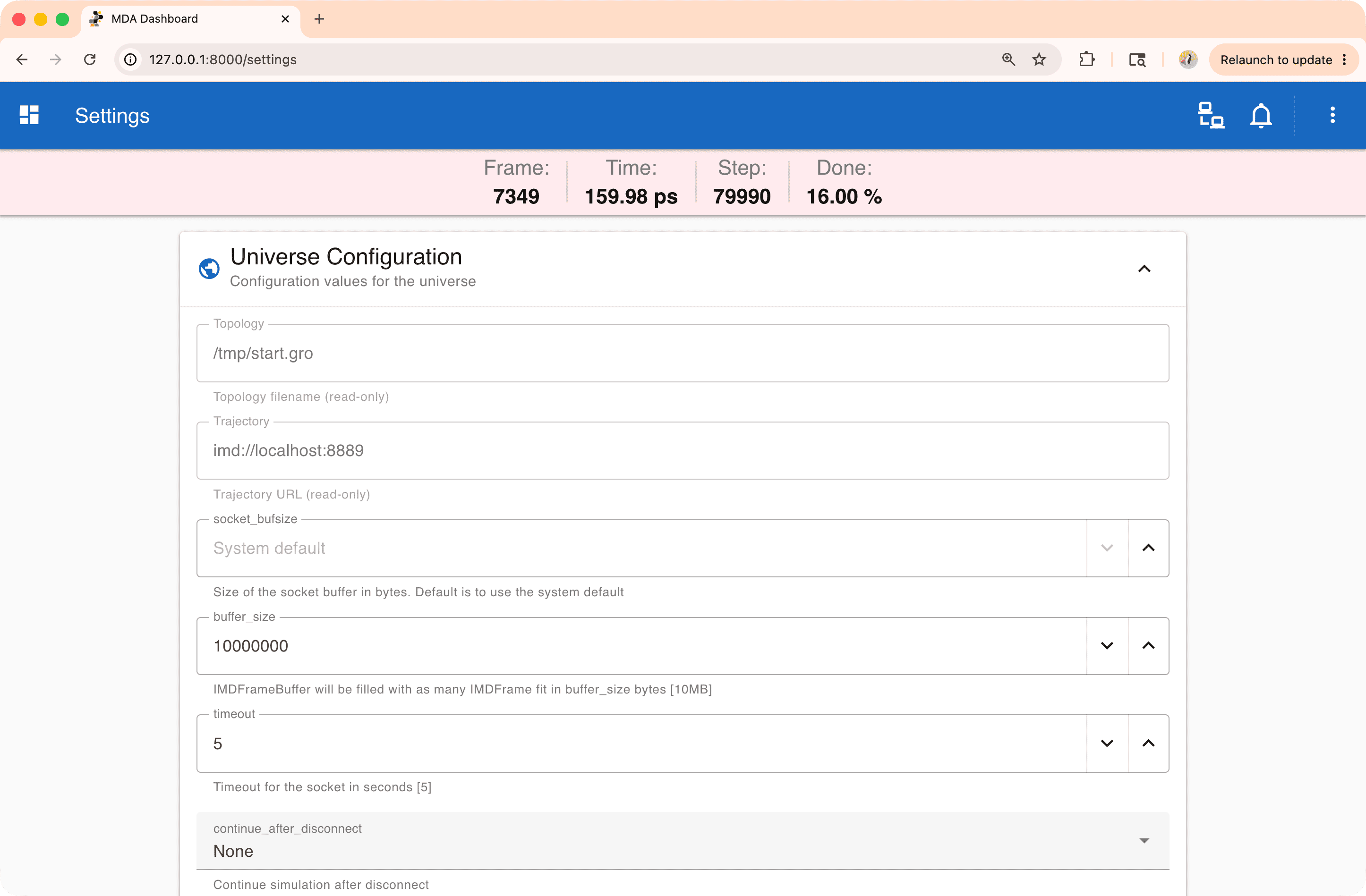 Dashboard Settings
We now have the mdadash package available on both TestPyPI and PyPI:
TestPyPI: https://test.pypi.org/project/mdadash/
PyPI: https://pypi.org/project/mdadash/
The CI is also setup (deploy.yaml) to upload to TestPyPI on tag creation and to PyPI on release creation.
We also have a PR open to have the mdadash recipe added to conda-forge. Once we have the feedstock repo, we should have this package available there as well.
At the end of week 2, we’ve reached the first milestone described in the Project Timeline.
Next week, I will get started on adding basic widgets and the execution layer (as discussed in MDAnalysis/mdadash#2).